


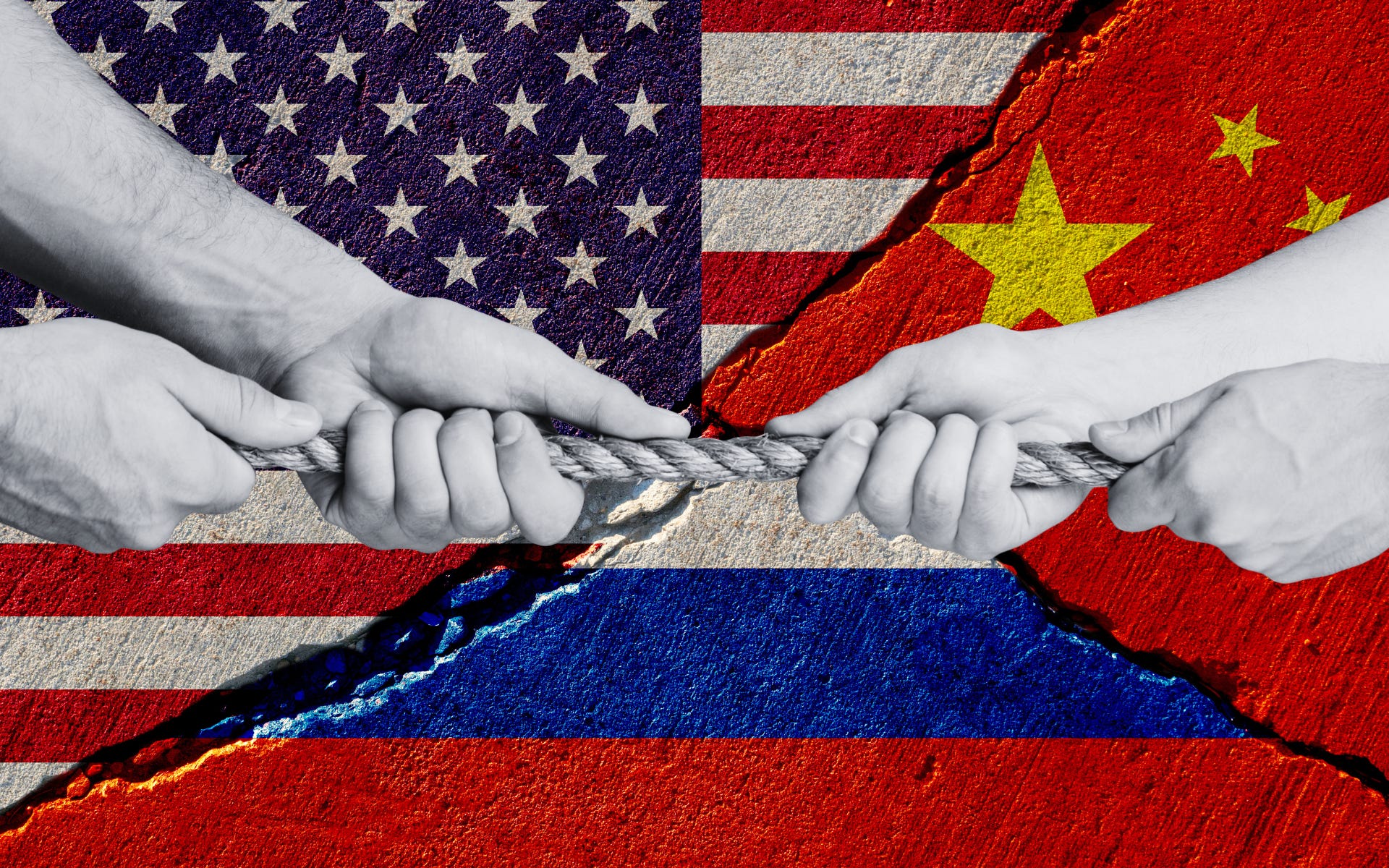
History doesn’t repeat itself, but it does rhyme; this is an old maxim often attributed to Mark Twain. This maxim seems to work quite well in all sorts of arguments about international history. If we analyse international political events with such a historical lens, we will likely come to conclusions that seem, by default at least, to be somewhat predetermined. For example, we can argue that because we had sleepwalked into World War I, it seems, in retrospect, somewhat inevitable that having ultimately failed to make the world safe for democracy or to have found a lasting peace in our time during the inter-war years, we were somehow back at it again just two decades later in World War II.
The Second World War was not a repeat of the First World War, but it did rhyme. Despite the different contexts and specifics, there were recurring motifs in the latter war, such as aggressive nationalism and territorial grievances, that echoed or mirrored those of the former. Unresolved issues in international politics always seem to find a way to come back and haunt us, even when more information exists about the consequences of not resolving them.
The Cold War, which pretty much defined international politics for the second half of the 20th century, grew out of the outcomes of the Second World War. The world found itself in a new conflict but with a familiar rhythm. The Cold War emerged as a result of new power balances and ideological clashes. International politics effectively became divided into two main poles led by two new superpowers competing for global influence, the U.S.-led Western bloc and the Soviet Union-led Eastern bloc. Some countries, particularly in the Third World, chose to remain non-aligned. However, new advances in nuclear technology meant that a hot war of mass destruction between the two new superpowers could not be won and should not be fought.
That’s not to say that a hot war between the nuclear superpowers could not possibly break out. It could have happened in 1962 over the placement of Soviet missiles in Cuba. Luckily, the skilful diplomacy of a few managed to save the day. With the prospect of a directly contested hot war too risky, strategic competition between the Western and Eastern blocs manifested itself in indirect ways, such as proxy wars, trade embargos, an arms and space race, espionage, and propaganda.
The two blocs were different worlds, one capitalist, the other communist. In this less globalised era, the Eastern and Western blocs were isolated and separate spheres with limited interaction or exchange, like two silos cut off from each other. There was no McDonald's to be found in Moscow or not much chance of finding an original Russian doll in Washington, at least not until the dying days of the Cold War in the early 1990s.
If it is true that the march of history inevitably rhymes with its earlier self, then, absent a change in the course of history, our future seems destined to remain somehow predetermined by our past. If this really is a credible line of reasoning, then there is an argument to be made that as Cold War 1 once dominated our politics and for so long held its sway, it should only be a matter of time before Cold War 2 finds its way into the light of day. It may very well be the case that since the early 1990’s we have in fact been living in what could now be re-understood as the inter-Cold War years, a relatively benign period, which may seem to be now coming to an end.