


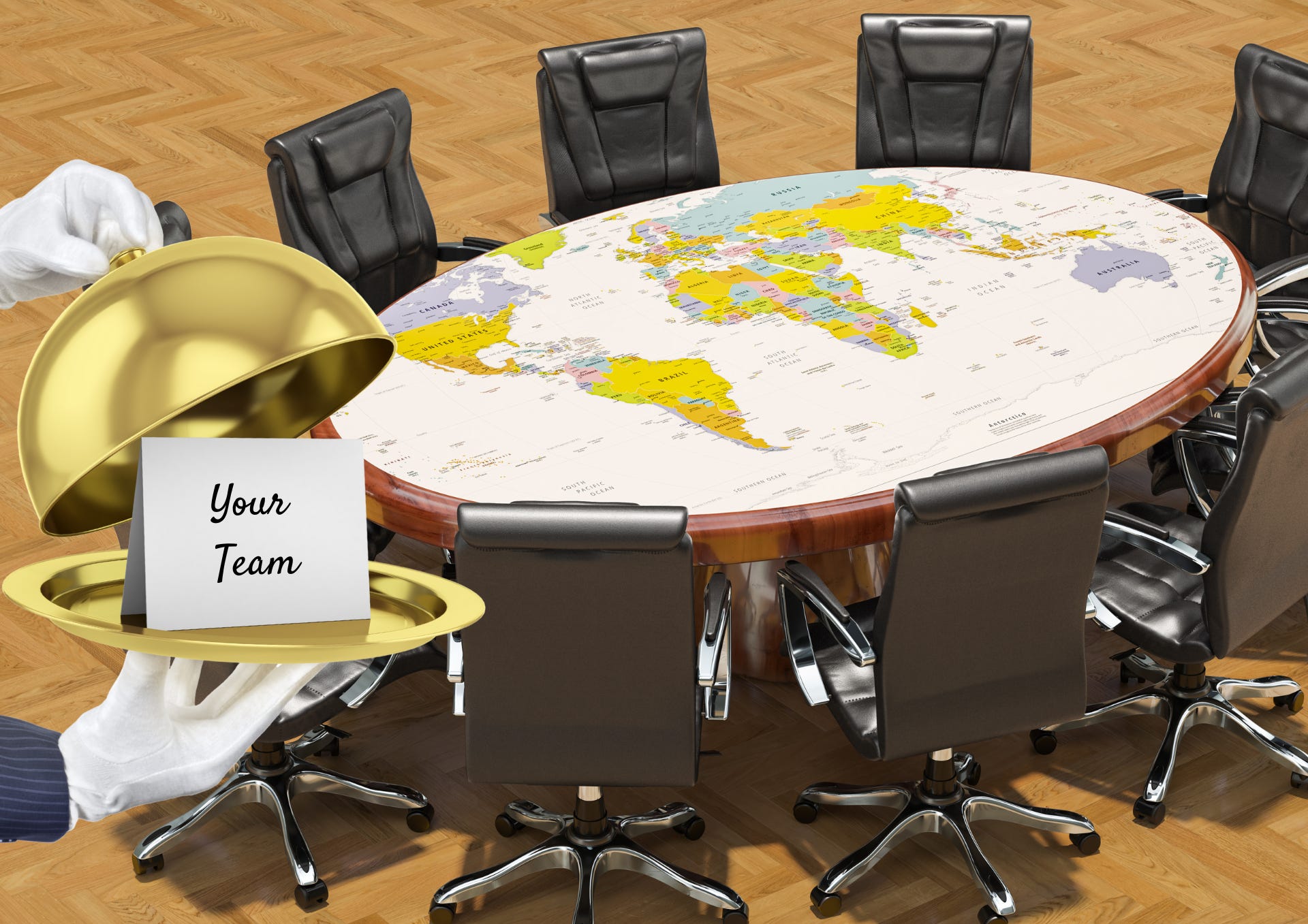
There is a well-known saying in political circles that goes, “if you’re not at the table, you’re on the menu”, which has become a sort of shorthand for how power really works in the international system.
The idea is that if you’re not involved in shaping decisions, then you’ll end up living with decisions that are served to you.
Here’s the former US Secretary of State, Anthony Blinken, making such an argument regarding the international system at last year’s Munich Security Conference:

In international politics, there is a hierarchy at play. At the top table of the international system, influence rarely rotates. While there are nearly two hundred soverign countries in the world, it is usually the same core powers, such as the United States, Russia, China, the United Kingdom or France, anchored as permanent members in the UN Security Council, reinforced through their roles in institutions such as the IMF and the World Bank, and extending across groupings such asthe G7, G20, and the BRICS that continue to, by and large, shape the global political agenda.
This table/menu metaphor really captures the rather blunt realist view that outcomes in international relations are determined less often (if at all) by the appeal to fairness or pure efficiency that many less politically engaged people might expect. In this view, it is more often the case that outcomes are determined by pursuing power, chasing relative gains and acting in one’s own interest.
But as was evident last year, not everyone in the international system would publicly endorse this worldview. When Secretary Blinken used the phrase to describe contemporary geopolitical engagement, China immediately objected, calling it “a stark zero-sum game mentality”.
But beneath this diplomatic sparring lies a much bigger question that matters just as much for business leaders today as it does for diplomats:
Is great power really the only force that determines outcomes, or can smaller, less powerful players also shape the game?
Let us begin with where this view originates